
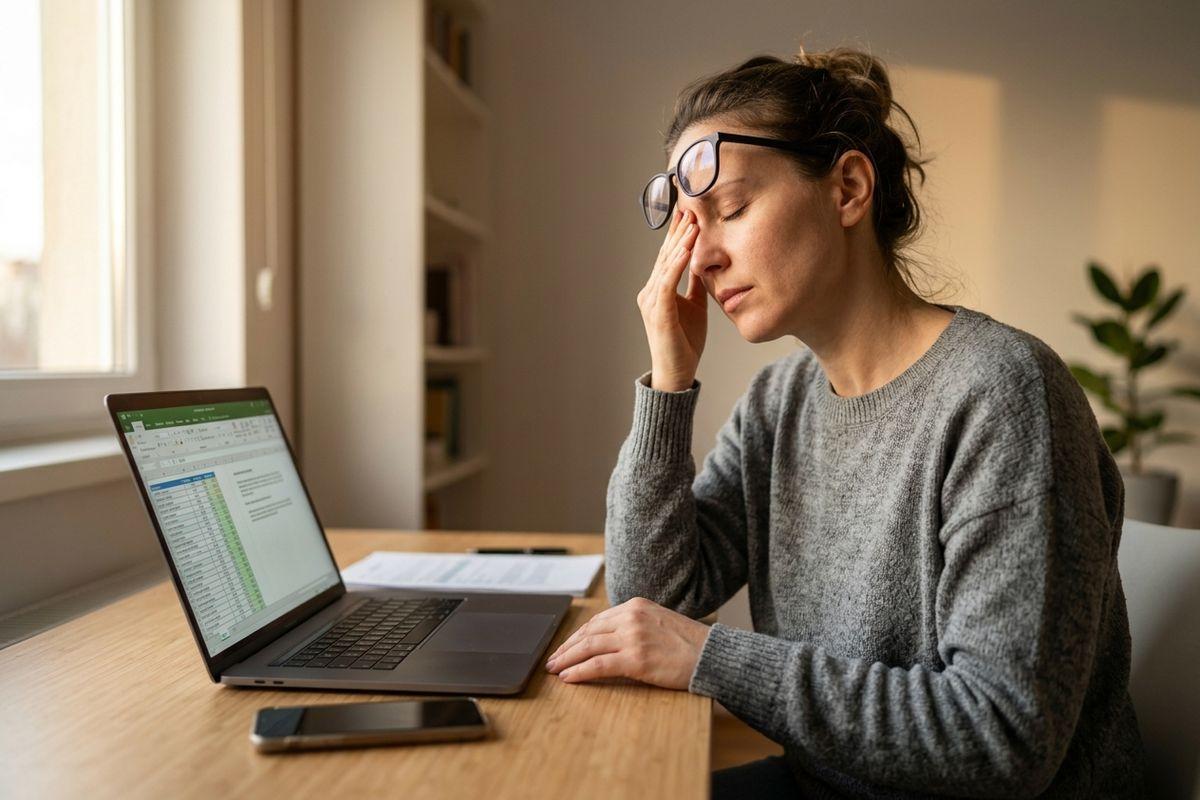
Long days in front of a screen can leave your eyes tired, sore, and unfocused. Maybe you rub them, blink hard a few times, and push through the last stretch of the day. But every so often, something else creeps in too: a woozy, off-balance feeling that seems to come out of nowhere.
That connection surprises a lot of people. Yes, eye strain can cause dizziness, because your brain relies on steady visual input to keep you feeling balanced. Once you understand how the two are linked, it’s a lot easier to spot the pattern and do something about it.
Common Signs of Eye Strain to Watch For
Close-up work asks a lot of your eyes, and your body feels it. When you spend a long stretch reading, scrolling, or doing detailed tasks, your eye muscles work overtime. That overload can scramble the signals your brain uses to keep you steady, leaving you lightheaded by the end of the day.
Eye strain rarely shows up on its own. Keep an eye out for these signs:
- Headaches or a dull ache behind your eyes
- Sore, tired, or heavy-feeling eyes
- Blurred or double vision
- Sensitivity to bright light
- Dry or watery eyes
If a few of these sound familiar, your eyes might be asking for a break. Give your eyes a rest before the discomfort builds into something worse.
Vision Problems That Can Lead to Dizziness
Sometimes the dizziness runs deeper than a long day of reading. Certain vision problems make your eyes work harder than they should, and that extra effort can leave you feeling unsteady.
When Your Eyes Don’t Work as a Team
Your eyes are meant to move together and point at the same spot. When one eye sits slightly out of line, your brain has to work harder to blend the two images into one, and your eye muscles pick up the slack.
That constant effort can wear you down, leaving you dizzy or off balance even during simple tasks like reading a book.
Outdated or Wrong Prescription
An old prescription puts your eyes in a tug of war, forcing them to focus through lenses that no longer match what they need.
Book regular eye exams to keep your prescription current so your eyes can focus without straining. That small update may make a noticeable difference by the end of your day.
How to Tell if Your Dizziness Is Eye-Related
Dizziness has plenty of possible causes, so a bit of detective work helps. Track when your symptoms show up and what you were doing at the time. Here’s what to pay attention to:
- The time of day your dizziness tends to appear
- Patterns that follow long stretches of screen time or reading
- Whether the feeling eases when you rest your eyes
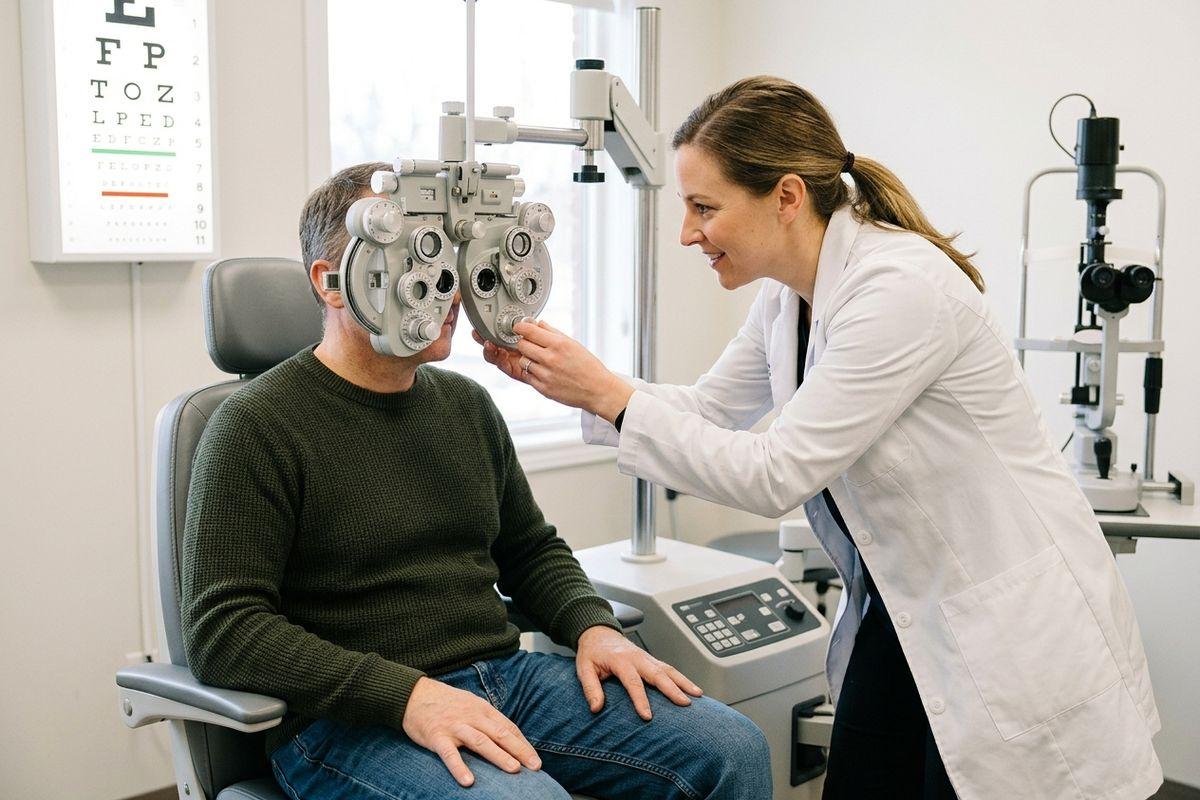
Once you spot a pattern, book a comprehensive eye exam. An optometrist can check how your eyes focus and work together, then walk you through what they find in plain language.
Ways to Relieve Eye Strain and Dizziness
Small changes to your daily routine can ease the pressure on your eyes. Pair a few habits with the right lenses, and you may notice a difference.
The 20-20-20 Rule
Every 20 minutes, look at something 20 feet away for 20 seconds. That short pause gives your eye muscles a chance to relax and reset.
It’s an easy habit to build. Set a quiet timer on your phone, and let those quick breaks become part of your workday.
Set Up a Comfortable Workspace
Your desk setup shapes how hard your eyes have to work. A few adjustments can take a real load off. Try these changes:
- Place your monitor about an arm’s length away and slightly below eye level
- Use soft, even lighting to reduce glare on your screen
- Keep lubricating drops nearby for those dry, gritty moments
Ask About Lens Options
When eye misalignment is behind your symptoms, the right lenses can help. Prism lenses are made to gently guide your eyes into alignment, so they don’t have to fight to work together.
A simple measurement during your exam can check for misalignment. From there, go over lens options that fit both your vision and your daily habits.
Ready to Feel Steadier?
Dizziness that follows a long day of screens or reading is worth a closer look. Update your prescription and adjust a few daily habits, and your eyes may feel steadier and more comfortable.
If the room keeps spinning after your workday, book a comprehensive eye exam with Ilex Eyecare. Let’s find the cause and help you feel like yourself again.