
Eye discomfort is easy to write off. Stinging at the end of a long day usually fades by morning, so most people don’t think much about it. When the same feeling keeps returning, though, your tears are often the reason.
You may have dry eye if your eyes sting, feel gritty, or water more than usual on a regular basis. A comprehensive eye exam can show whether your tear film is behind the irritation.
Dry eyes happen when your tears stop keeping the eye surface comfortable, either because you aren’t producing enough of them or because the ones you produce evaporate too quickly. It’s common, and it responds well to care.
What Dry Eye Feel Like
Discomfort usually arrives well before anything changes about your vision. Watch for a few of these:
- A stinging or burning feeling that builds over the course of the day.
- A scratchy, sandy sensation, like something is stuck under your lid.
- Redness across the white of the eye.
- Itchiness along the lash line.
- Sensitivity to bright light or headlights.
Symptoms often peak in the evening, or after a long stretch of concentration. You blink less when you’re focused, and fewer blinks means less fresh tear film spread across the eye.
Symptoms That Might Surprise You
Not every sign of dry eye is what you’d expect. Some symptoms can throw you off. Here are a few that often catch people off guard:
- Watery eyes can still signal dryness, since your eyes may overreact by flooding with tears.
- Blurred vision or eyes that tire quickly during reading or screen use.
- Trouble wearing contact lenses comfortably throughout the day.
What Causes Dry Eye
Your tears have 3 layers: oil, water, and mucus. Each layer has a job, and trouble in any one of them can leave the film unstable. The oil glands along your eyelids release a thin coating that slows evaporation, so when they clog up, tears disappear faster than your eyes can replace them.
Everyday circumstances can contribute too:
- Long stretches of screen work, which quietly cut your blink rate.
- Dry indoor air, wind, or smoke.
- Antihistamines, decongestants, and some blood pressure medications.
- Hormonal changes, including pregnancy and menopause.
- Autoimmune conditions such as rheumatoid arthritis or Sjögren’s syndrome.
Who Gets Dry Eye Most Often
Anyone can develop symptoms, though a few groups experience them more often. These patterns come up often during exams:
- Adults 50 and older, since tear production tends to drop with age.
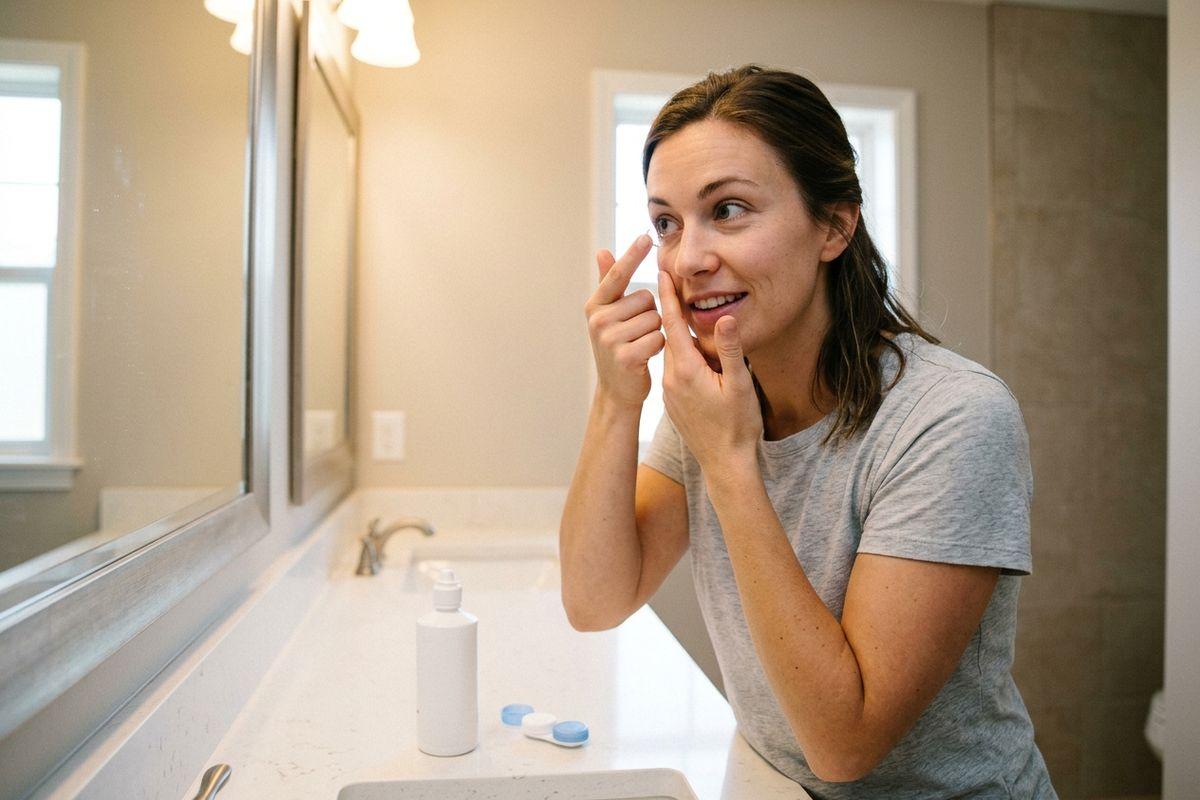
- People who wear contact lenses daily.
- Anyone recovering from LASIK or cataract surgery.
- People whose diets run low in omega-3 or vitamin A.
Bring it up at your next exam if one of these applies to you. Your history gives your optometrist a head start on narrowing down what’s causing the symptoms.
Ways to Ease Dry Eye at Home
Start with preservative-free artificial tears. You can use them several times a day without the added irritation that preservatives sometimes cause with frequent dosing.
Build breaks into screen work. The 20-20-20 rule keeps it simple: every 20 minutes, spend 20 seconds looking at something about 20 feet away. Blinking fully during those pauses helps as well.
Try a warm compress over closed lids for 5 minutes in the evening. Gentle heat can soften thickened oil and help the glands drain the way they’re meant to.
A few adjustments to your surroundings and your meals may also help:
- Run a humidifier in the rooms where you spend the most time.
- Angle car vents and fans away from your face.
- Add omega-3 sources like salmon, flaxseed, or walnuts to your week.
- Drink water steadily instead of all at once.
- Wear wraparound sunglasses on windy days.
When to See an Eye Doctor About Dry Eye
At-home relief can go a long way, but it has its limits. There are times when it makes sense to book a comprehensive dry eye appointment to understand what’s actually going on. Book a dry eye assessment if any of the following sound familiar:
- Discomfort that lingers or worsens despite what you’ve tried.
- Vision that fluctuates throughout the day.
- Redness that never fully settles.
- Pain, discharge, or sudden sensitivity to light.
Your optometrist can measure how quickly your tears break down and examine the glands in your lids. That information shapes the treatment plan, whether it points toward prescription drops, in-office gland therapy, or a change to your contact lens routine.
Stop Guessing About Your Dry Eye
Persistent irritation deserves a proper look, not another bottle of drops from the pharmacy shelf. Our team at Ilex Eyecare takes time to examine your tear film and lid health before recommending anything.
Book an appointment and find out what your eyes have been trying to tell you.